

Research Focus
Cardiovascular disease (CVD) develops over decades, with molecular and cellular changes occurring long before clinical manifestations become apparent. During this prolonged preclinical phase, multiple cardiometabolic traits—such as elevated blood pressure, dyslipidaemia, atherosclerosis, increased body mass index, liver fat accumulation, and chronic inflammation—often emerge and coexist. These traits are frequently comorbid, reflecting multimorbidity driven by shared underlying biology rather than independent disease processes.
Many of these traits are well-established risk factors for CVD, yet growing evidence suggests that they are genetically and biologically interconnected. Large-scale genetic studies have shown that these risk factors share common genetic variants and molecular signatures across the genome, transcriptome, and proteome. This convergence points to shared biological pathways that contribute to CVD risk, progression, and clinical heterogeneity across tissues and organ systems.
Our research applies state-of-the-art statistical genetics and computational approaches to investigate the genetic and genomic basis of CVD risk and progression using publicly available datasets and large-scale population biobanks, including the UK Biobank. We first identify genetic variants influencing CVD and its related risk factors using hypothesis-free genome-wide association studies (GWAS). While GWAS have been highly successful in identifying thousands of associated loci, they primarily report statistical associations and provide limited insight into the underlying disease drivers.
To address this limitation, we integrate genetic association data with multiple layers of omics information, including transcriptomic and proteomic profiles. This integrative framework enables interpretation of genetic findings, prioritisation of likely causal genes, and identification of shared biological pathways underlying comorbid cardiometabolic traits. To this end, we apply a range of post-GWAS analytical methods to gain mechanistic insight into early disease processes and to inform strategies for risk stratification, prevention, and therapeutic targeting. A diagrammatic illustration of selected methods routinely used in the group is shown below.
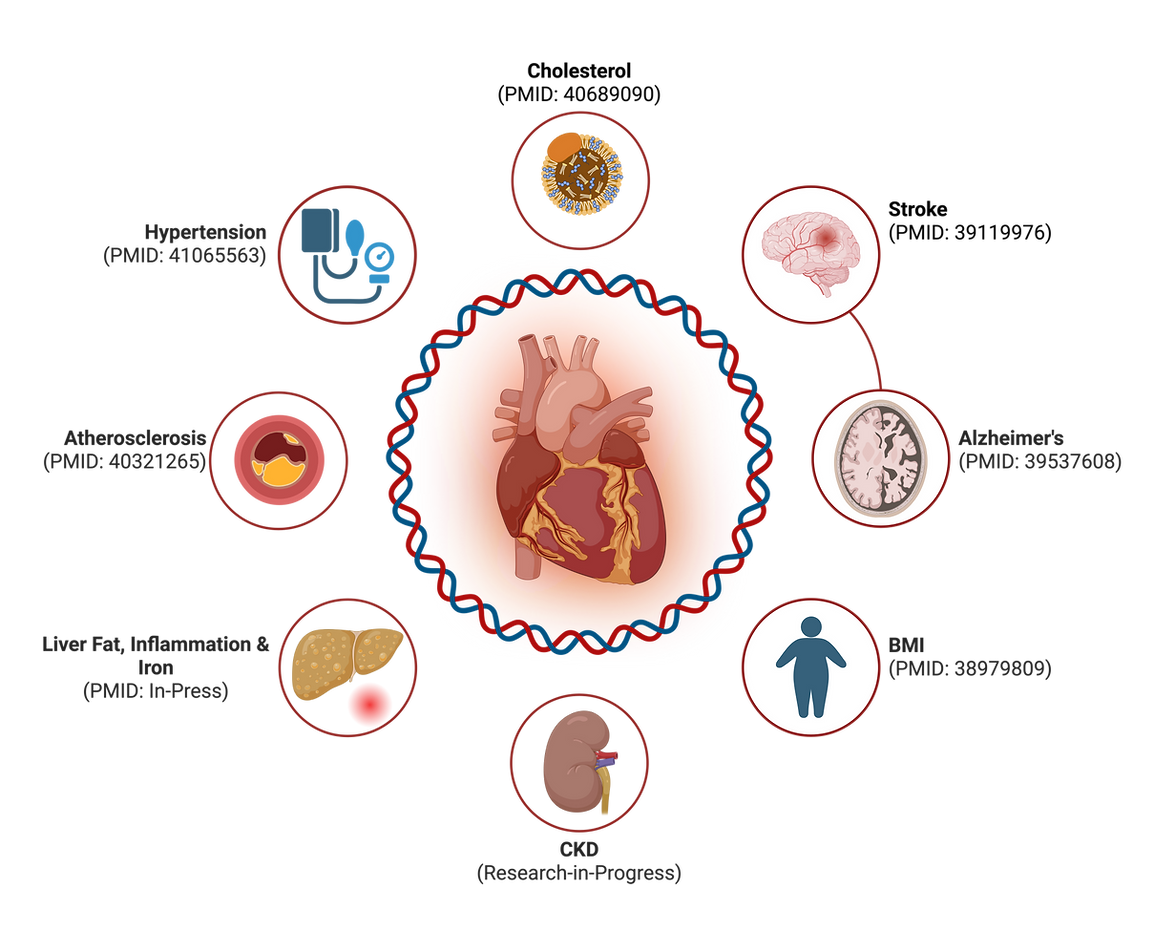
Published work from the group across key research areas
Overview of analytical methods applied by the group across the central dogma
-2.png)
